Showing posts with label hospital. Show all posts

Sunday, 26 January 2014

My First Week of Final Nursing Placement - Year One

So here marks the end of my first week back on placement and what a week it has been. Journaling is a new thing for me so please do bear with me. I start to record my positive areas and also areas for development mid-week and intend on carrying this on throughout my training as I'm finding it very helpful, not only in my development in my training but also as evidence for my progression criteria for my nursing assessment file.


Day 1 - Early shift

Today was my first day back to this placement since September. I spent most of the day readjusting to the ward environment again. It started out quite relaxed, teamed up with my co-mentor (brilliant lady!) who let me tag around with her pretty much all day, assisting patients, completing and organising patient notes, calculating IV doses, giving medications out, checking vital obs, etc. I keep forgetting but I'm going to get myself a tongue depressor to write common IV calculations on as a pocket guide. A lot of nurses/students say they did this and it was helpful.


Day 2 - Early shift

Today I was very much floating around all over the ward - no easy task when there are 27 patients and several nurses asking you to help them out. For most of the day I took vital obs and ensured patients were comfortable, documenting all the time. I went in to check on one patient who was on a monitored bed and had been doing quite well. His respiratory rate was up in the 30s (normal is between 12-20!), pulse over 120 bpm, oxygen SATs 85%, temp over 38oC and BP barely readable. He wasn't very responsive and was pale and clammy so I immediately got the nurse who had another nurse in the room in less than a minute and a doctor to review as well. I remember just standing there thinking, 'Oh God! What will I do when I'm the nurse?! Will I know what to do?". Nursing is scary.

I also accompanied a patient to a CT scan as she was very nervous. The nurse in charge of that side of the ward didn't seem overly impressed really but I wouldn't have forgiven myself if I'd let her go by herself, shaking and terrified.


Day 3 - Early shift

Today was my first day with my mentor since returning to the ward. I helped to serve the breakfasts for patients and then assisted patients to wash and get dressed. Following this my mentor explained that she wanted me to look after the patients in the 4 bedded bay section of the ward, where 3 of the beds were being used. This was quite a task since I'd never done it before and I was quite nervous. My mentor explained the importance of problem solving and managing time - 2 big things I need to work on. I had to ensure all tasks were completed for each patient - vital obs, any planned scans/xrays, record care rounding, document nursing notes from the morning and any new plans from seeing the consultant, ensure patients were pain-free and comfortable, assist to the toilet, support with nutritional intake, contact family to bring in more clothes, contact a care home to discuss patient history and ongoing needs, diffuse a situation with an agitated patient, monitor the condition of a patient who appeared more weary than the previous day, completed an ECG, talk to family members and friends of patients and refer to qualified staff where I couldn't help with a query. I found all of this very challenging to say the least alongside caring for one of the patients who had become increasingly agitated and wanted to continuously move around despite feeling sick and being very unsteady on her feet.

Whilst the ward had a meeting, I was also asked to ensure the safety and comfort of 2 other patients just outside of the bay, and although it was difficult to juggle, I managed and learnt the importance of prioritising tasks. I now see (from a more restricted view of course) why nurses are always so busy! I still have so much to learn.

Positives:
+ Managing numerous tasks
+ Staying positive all day despite how challenging it was.
+ Completed a full SBAR handover sheet for a patient leaving the ward which I'd never done before on my own.
+ Liased with other professionals including Nurses, Pharmacist, Physiotherapist, Occupational Therapist, Care Home Manager, Consultant and Dr (F2). 

Areas for Development:
- Time management
- Prioritisation skills
- Delegation skills
- Try not to get side-tracked


Day 4 - Late shift

Today I was asked to look after the 4 bedded bay again. In early PM there were only 3 patients but a new lady was brought up, meaning all beds were full. 3 of the ladies had dementia/delerium.

I admitted the new patient to the ward, ensuring she was as comfortable as possible and completing all documentation. This process was quite difficult as the lady had quite an advanced level of dementia and was very anxious about being in an unfamiliar place with very unfamiliar people around. One of her daughters helped to answer some questions given that she was unable to give sound answers due to her illness. All the while the patient was trying to go home.

I think I managed my time more effectively today, allowing equal time for each of my 4 patients and completing all vital obs and documentation. I went with my mentor to administer medications and gave some subcutaneous injections which I still feel a bit weird about. One person was difficult to inject due to having a very tight and swollen abdomen. The next 2 that I did felt much easier but I still cringe thinking I'm going to hurt them, which I know is ridiculous since it's a needle and is never a comfortable thing to have. I'm hoping this improves with more practice. I haven't given any intramuscular injections yet - I hate to think how nervous I'd be doing that!

I spoke to several family members regarding their loved one's condition and answered any questions I could. If I couldn't help, I directed them to a qualified member of staff.

With the help of my mentor I was able to diffuse a situation with the new lady from my bay who was very distressed. Her daughters were trying their best to keep her calm and seated but because they were stressed I think it wound their mother up too. She stood up and tried to exit the ward, saying she was going home and wouldn't be told to stay. Seeing my mentor's expertise was quite inspiring. She knew exactly what to say and how to say it. I just followed her lead and we worked together to calm the lady down quite quickly actually. When I got home I researched different techniques to calm escalating situations, particularly for those patients with dementia. There is quite a lot of good advice out there about maintaining a calm environment but when you're in a hospital setting, how calm can it actually be? It must be so awful for patients like this.

Throughout the day I also found myself delegating tasks so that I could complete the work I'd been asked to do rather than being sidetracked by 1,000,000 other things, which believe me is so easy to do! My mentor and I discussed the importance of completing tasks and not getting sidetracked. I asked for assistance from HCAs who were more than happy to help rather than me  struggling and missing things out.

Finally, I completed part of a handover sheet for the nightshift staff about the new patients on the ward who I had been caring for. My mentor also asked me to update the sheets for some other patients too but I got sidetracked and only got half done. Boo! It's so, so, so hard to get everything done, even with the best will in the world and being run off your feet and asking for help. The information was passed on in the end by the way, but verbally rather than being printed on the sheet ;)

Positives:
+ Managed time better
+ Completed all paper work (except some info on the handover briefing sheet!)
+ Completed most of a handover briefing sheet
+ Delegated tasks
+ Spent equal time on all patients in my bay
+ Diffused a situation effectively

Areas for Development:
- Still getting sidetracked - stay on task!
- More practice/confidence with injections
- Understand fully why a patient is in hospital and their journey to getting better and home
- Research: INR and Warfarin, PPI and Lansoprazole, injection technique and techniques to calm patients in   distressing situations, especially those with dementia.


Day 5 - Late shift

Today was my last shift of the week and I was shattered to say the least. My mentor and I were on a different part of the ward to the previous couple of days so I wasn't looking after the 4 bedded bay.

I carried out what felt like 100 sets of vital obs which, although they get a bit samey are...well, vital, as the title suggests. They  let you know how the patient is doing and if/how they are responding to treatment. My ward cares for a lot of people with COPD so it's really important to keep a check on their oxygen saturation levels too.

I also admitted 2 new patients to the ward, completing all necessary paperwork (reams and reams!).

Providing care for one particular patient was pretty difficult for me. He had been admitted with end stage MS and was extremely poorly. He was being fed through a tube in his stomach (called a PEG), had a colostomy and a catheter bag, could only respond to voice and had extremely limited speech and movement. For those who haven't read one of my earliest posts where I explain this, my Mam has MS so seeing this was a bit close to home for me. I know that MS affects people in different ways and that my Mam's MS is a fair distance from this patient's at the moment, but it caught me nonetheless. This could happen to my Mam one day. I have absolutely no idea how I will deal with this when it comes to it or if it will happen like this. It's just such an awful disease. Distancing myself personally from this was quite a difficult thing to do but I need to do it!

My mentor showed myself and a newly qualified nurse how to set up a PEG feed drip. I've fed a lady through a PEG before but it had always just been manual for her - flushing it with water through a syringe (with no push), then pouring in the feed and then finally flushing it again with water. It was always very interesting when the lady coughed. I'm sure you can imagine what happened! A nice shower of Jevity (that's the name of the feed) for me, haha! Anyway, I digress. My mentor also showed me how to completely change a colostomy bag. I've emptied an ileostomy bag before and it was just a matter of disposing of the contents and then closing it back up again, but this one had to be completely removed and replaced. It was very strange seeing how it all works and has lead me to several hours on YouTube trying to make sense of it. My partner definitely didn't appreciate me talking about it over dinner, that's for sure, hehe!

I found my time working alongside the newly qualified staff on the ward extremely helpful today. They were always asking if I was OK or if I needed help or advice which gives me so much hope for when I qualify in 2 short years. I can't wait to be able to offer the same support when I'm a Staff Nurse.

I also found that after this week I feel much more settled as part of the team on the ward. I've been on this ward for a total of 9 weeks now (spread out over the year) and due to nerves and finding my feet I've held my personality back a little bit since I've been mostly trying to keep my head above water. But today I was able to work alongside people, feeling like I was helping and not hindering, join in conversations and not hesitating for a second if I needed some help/advice. Team work is so important in such a stressful environment.

I had my initial interview (placement documentation) with my mentor today to discuss what my targets are for this placement and to go over my progression criteria that I need to meet by the end of the 6 weeks. I've got 6 more to get signed off which I'm well on the way to getting but find completing the evidence so tedious. My mentor said that she's happy with the amount of progress I've made and highlighted the importance of approaching her if I was struggling with anything. She's an absolute gem :) I really think that although I have to travel to get to my placement, I have hit lucky with this one. I get such a variety of experiences, a great team and a fab mentor. I doubt I'll be this lucky throughout my training so I am definitely making the most of it for now. 

So here are my targets for final placement of first year:

1) Identify a group of patients at the beginning of each shift to be responsible for, including all care, documentation, treatment and discharge planning.
2) Widen knowledge of drugs commonly used on the ward
3) Identify and be aware of the signs of the deteriorating patient and be involved in implementing the escalation of care
4) Attend Rapid Access Cardiac Clinic with Nurse Specialist

A lovely way to round off my last shift of my first week back was when a patient's family came to find me to thank me for all I had done and for helping their Mam so much during her time on the ward. Such a lovely feeling :)

Positives:
+ More confidence with admissions process
+ Learnt how to set up a PEG feed and change a colostomy bag
+ Great to hear I'm making good progress
+ Improving delegation skills
+ Feel part of the team

Areas for Development:
- Distance from personal/professional situations 

Wednesday, 15 January 2014

My First Patient

We had a task in one of the Care, Compassion and Communication sessions at university where we had to write a poem about an aspect of our placement experience so far. I've had a bit of a shaky year so far so I think this task hit me a little bit. I was fine writing the poem, I quite enjoyed it actually and found I slept better that night than I had in a while. Maybe I needed to get some things off my chest. When we attended the session people volunteered to read their poems to the class and I was one of those, feeling quite proud of what I'd produced and all. So I started reading it, and then felt the tears coming. I felt such a fool. My whole class seeing me so vulnerable and fall apart - I was so embarrassed. I managed to finish the poem and everyone was absolutely lovely (of course) but I hated the fact that they'd seen that side of me. Hated the fact that they were probably all thinking, "Look how soft she is", "She'll never survive nursing", "She's not resilient". But how wrong I was. My class is just amazing, every one of them clearly felt it too and I knew I wasn't alone. Nursing and working with vulnerable people has a profound effect on you. It's hard not to feel it and I think in that moment I realised that it's not about maintaining a hard shell all of the time. You can't wear armour all of the time. That release was exactly what I needed and I am so grateful now that I had it. I've found it pretty difficult to reflect on things in the structured manner that the university advise but I think I've found a method that really helps me - poetry. (I never thought I'd be saying those words!) 

Anyway, here is my poem about the very first patient I looked after on my very first placement - someone I will never forget.


My First Patient

Your first day on the ward, a strange place to be,
your proud smile says, "You don't need to look after me!".
You chat to all your neighbours in your bay,
Offering them a hand, you brighten up their day.

Your wife brings you flowers all the way from your farm,
a little piece of home for you to look back on.
Your home is your work place, your passion so true,
you talk with such fondness, with stories of the view.

I wish that you could see it now and be there just once more,
I'm sorry that you're confined here behind the hospital doors.
Your family, they pray for you and hope you'll be home soon,
they're missing you an awful lot, they're here most afternoons.

Days go by and your strength wanes,
it's difficult to fight through that much pain.
You accept our help, our comfort and support,
we provide care and compassion, with your needs in our thoughts.

I don't show you that I'm sad to see you get so weak,
I still sit by your bedside where we always speak.
The words we share become less and less,
I can see you fading, I must confess.

Your heart beats its last and your chest fails to rise,
you fade away so peacefully as you close your eyes.
You've gone to a better place now, a place without the pain,
with your family and loved ones, your spirit will remain.

I've known you such a short time, but have learnt a lot,
you are such an inspiration and will never be forgot.
And although it's sad that you're no longer here,   
I look back in happiness and not in fear.


Sunday, 15 September 2013

My First Nursing Placement

I'm currently in the 3rd week of my 2nd block of placement on a general acute medical ward. The ward itself has 27 beds that are rarely empty and quite a high turnover of patients. There are 5 cardiac monitoring beds for patients who are most at risk. It is a very interesting ward to work on as patients come on with such varying conditions and I have learnt an incredible amount already, even after just 6 weeks. My mentor is a Sister on the ward and is obviously very busy but makes sure to give me excellent learning opportunities. I also have 2 co-mentors (staff nurses) who are brilliant and explain everything so thoroughly. I really think I have landed on my feet with this placement even if it is a fair distance for me to travel every day. The structure of placements at my university has changed recently and means that we have 1 Hub placement that we revisit over the course of the year and 2 Spoke placements in between. The placement I'm on at the moment is my Hub placement. I'm there for another 2 weeks and then back for 6 weeks in January. I have my Spoke placements after this placement where I will spend 2 weeks in a mental health environment and 2 weeks with a Health Visitor. These are basically to give us a broader outlook of the nursing career.

So when I first started reading blogs I was itching to know what student nurses do whilst on placement and at first I expected that people would be doing all of the nursey things straight away. Wrong. It makes A LOT of sense really as when you set foot onto a ward (which I had never done in a work capacity) it can be very daunting - alarms here, wires there, patients with life threatening problems, family who are anxious, staff running around, patients coming on the ward, other patients leaving, buzzers going...you get the picture - it's stressful! There is so much to learn that starting with the basic stuff, the fundamentals, is vital. So for the first 4 weeks of my placement (all of July basically) I spent in the role of a HCA (Health Care Assistant), learning from the resident HCAs, working with my mentor to understand the role better, getting used to the ward routine, learning how to take vital obs (BP, pulse, temperature, respirations, oxygen saturation, AVPU (alert, vocal, pain, unresponsive - basically that the patient responds and to what), blood sugar, passing urine and pain level (if any), reporting this back to a staff nurse if the patient had anything out of the ordinary, assisting with meal times, helping patients with daily living tasks (getting out of bed, toilet, shower, bed bath, dressing, etc.), bed making, restocking supplies, taking patients to different departments... the list is endless really. HCAs do a lot on the ward and basically keep it going. They have the most contact with patients and some of them can teach you anything you want to know. There are a few I have clung to on several occasions and they have taught me a tonne. Moral of the tale - stick with the HCAs ;)

Since I returned to placement after the Summer, my Mentor has given me more opportunities to broaden my experiences and is allowing me to partake in drugs rounds and slowly increasing my responsibilities, which I am thoroughly enjoying. I think the easiest thing here is to list the things I've been doing:

  • Bed baths
  • Showering patients
  • Making beds
  • Taking vital obs - completing NEWS charts (early warning system)
  • Admitting patients onto the ward
  • Completing documentation
  • Dressings
  • Watching procedures - Lumbar Puncture, Ascitic drain, Xrays, Endoscopy
  • Assisting a Dr with an Ascitic drain - I put a sharp in a normal bin as I was so nervous...oops! I'll never make that mistake again!
  • ECGs (heart trace)
  • Serving food and assisting some patients with their nutritional needs
  • Speaking to family/friends of patients
  • Re-stocking supplies
  • Tidying the patient's rooms/ward
  • Taking BMs (blood sugar)
  • Laying out a dead patient
  • Drugs rounds
  • Checking skin integrity
  • Calling family regarding patients' needs
  • Arranging transport for discharged patients
  • Preparing IV solutions (e.g. 450g Tazocin with 20ml water, mixing then adding to 1000ml Sodium Chloride) and setting up the machine...under supervision obviously.
  • Simple drug calculations
  • Injections (4 and counting!)
  • Observing Aseptic technique - Catheterisation and an aseptic leg dressing
  • Observing an Occupational Therapist assess a patient and attending a home visit
  • Assist in a cardiac arrest (SCARY!)
  • Swab to test for MRSA
  • Dip urine and sent samples to the lab
  • Accompany patients to other departments (Xray, Ultrasound and Endoscopy so far) and observed the procedures
  • Attend Medical Gas Safety and Syringe Driver Training
  • Removing venflons
  •  ...the most important one I've found - talking to patients.
I have come across a variety of patients on the ward, mostly elderly but some quite young. One girl was younger than me (around 20) and unfortunately admitted due to taking an overdose. That one was difficult. I love caring for elderly patients and to be honest before I started I was dreading working with elderly people. I think because of my previous work experience I expected it to be the same but the environment in a hospital is vastly different to that of a care home. I realise now how poor the care actually was in the home I worked in for a few shifts. This whole nursey thing doesn't half make you reflective!

I feel like I've dealt with all that has been thrown at me quite well and am adapting all of the time. I can feel myself learning and developing constantly, dealing with situations and people I never thought I'd have to contend with. All in all the best advice I can give to any student nurse is to just take things as they come and not expect too much. Every one learns at different rates and every hospital/ward/mentor is different in how they teach students. I have some friends on the course who did all I've done in the first month and at first I was jealous but after realised that taking things in my own pace leads to a better learning experience personally. Apologies if I've skimmed over things a bit. I've been trying to finish this post for ages and been a busy bee. If anyone reading this has any questions or would like any advice please don't hesitate to comment.

Overall placement came as a bit of a shock for me as well as my nails. They're usually coated in something sparkly but now look absolutely pants, short and plain. My toe nails remain overtly sparkly to compensate. Moral of the tale - make the most of holidays and paint your finger nails, ha!

P.S. I'm not sure if I mentioned this previously, but I applied for a Bank HCA job at a private hospital and heard last week that I got it! I'm very excited to get going.

Hope you're all well :)

Monday, 9 September 2013

A little information on my first nursing placement

I've just fell upon this little blog post that I obviously meant to post a good while ago but never got around to doing. So here it is...

I found out where I'm going on placement - YEAH!

When I first found out let's just say I was less than impressed with it and I had an email ready to send to my personal tutor begging for a swap. It turns out I have to travel over 50 miles a day, adding 2 hours to an already tiring day. For obvious reasons I can't say where I'm placed but I will say I'm over the moon with it now that I've thought about it clearly and came to terms with it all. My partner and family are being very supportive about it and telling me to focus on the positives, of which there are many. The hospital is very modern, in a lovely area and quite small with only a few wards. The ward I've been placed on is acute general medicine which means I could deal with anything that isn't surgical...so I'm going to learn a tonne. There is a specialist cardiology bay as well as a palliative care bay within the ward which I'm terrified about but so excited to learn and help as much as I can. I know it's going to be difficult but I've always understood what I signed up for. Not everyone is going to be fighting fit and skipping out of the ward. I know some people will require support and guidance towards the end of their lives. It's absolutely heart breaking but it's reality isn't it? I know I'll probably spend a while in the sluice/toilet bubbling whilst I come to terms with everything properly as I'm soft as clarts but I'm hoping I'll learn to deal with these things in time and be the supportive, caring and professional nurse that someone needs in their final hours.

Note: I have been on placement now for almost 6 weeks and am currently writing a post about my experiences so far. I'll hopefully be uploading it in the next couple of days. Hope all is well :)

Thursday, 27 June 2013

More Nursing Practicals

Over the last few weeks we've had more interesting practical sessions where we covered bed making, personal care (helping to clean a patient), vital observations, injection technique and poo/urinalysis (yum!). All very 'nursey' things to learn and finally a little time out of the lecture theatres.


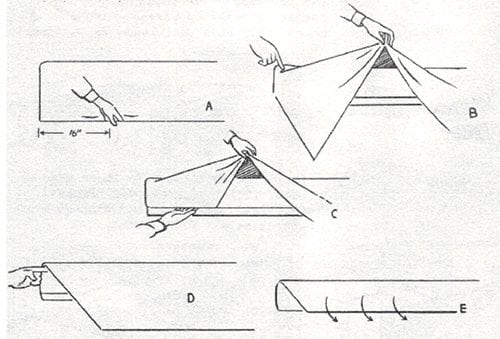
I swear bed making sounds easy. Our tutor is an ex-army nurse and takes hospital corners faaaar too seriously! I still have "make a triangle, fold it under and tuck" stuck in my head, which may be a good thing I suppose... I also didn't know that there were different names for the sheet 'layers'; he called them some weird name that I really can't remember cos it seems truly irrelevant really.


Personal care was a really interesting session although the tutor didn't spare any details (good thing I'm sure!). I have delivered (how detached does that sound?!) personal care in the past so have experience already although I have never done this in a hospital environment which I can imagine is slightly different given how busy it will be and the possibility of it being on a bay rather than a private room. I like that the way he described the entire process was focused on maintaining the dignity of the patient and ensuring that they retain as much independence as possible. One thing that was highlighted quite frequently was curtains are not sound proof which I'm told many healthcare professionals forget. Another thing that struck me is how operational it all seemed. All cleaning equipment is disposable to prevent cross infection. The whole help a patient to wash and change a sheet beneath them...I'm not sure how comfortable I would be in this situation... :0/


The vital observation sessions have been challenging. We've been    learning how to take manual blood pressure, temperature, capillary refill, oxygen saturation, pulse and respiratory rate and are soon to have an OSCE based around these skills (as well as communication of course!). My friends and I have been practising so we're hoping we'll cruise through it and I've been using my close ones as patients too :) I'm still absolutely terrified for this exam mind :O


Urinalysis and poo analysis were yummy as you can imagine. Again it was quite a basic session (more of an introduction to it) as I seriously couldn't just go into practice now and confidently say , "Yes, that's a 3 on the Bristol Stool Chart and that person's urine means they have XX wrong with them because they have XX in their wee!". Clearly practice makes perfect with these things. It seems pretty icky to wish for more experience with these things but I am...all part of being a nurse :)


Injection technique was an OK session...not exactly as I hoped but we learnt the basics, which I suppose is all we can hope for at this early stage. We were each given an 'arctic roll' (a rubber one, not an ice cream one) and practiced both subcutaneous (injection in fatty tissue) and intramuscular techniques (muscular tissue - deeper and more painful). I visited my first placement and my mentor told me that I will be administering subcut injections - terrifying prospect but really exciting too!


So that's a really brief overview of what we've been doing. I start placement in less than 2 weeks so will be able to (hopefully!) practice most of these things in real life.


I'll keep you posted :)