Showing posts with label clinical skills. Show all posts

Friday, 17 January 2014

A long overdue catch-up: What I've been up to, nursing placements, Bank HCA job and almost finished first year.

<a href="http://www.bloglovin.com/blog/9790997/?claim=cjnsfma5e6m">Follow my blog with Bloglovin</a>

I must say I have been extremely busy (usual excuse) and have a lot of catching up to do in the blogging world. So over the last 3 months (oops!) I finished my second placement and had 2 spokes, which are kind of like tasters in different areas of nursing. I've also had an essay, a Workshop and 2 exams, as well as copious amounts of placement documentation and research. I then started a Bank HCA job and of course trying to fit my life around all of this has been a challenge in itself. I'll fill you in on placements and my new job in this post and then I'll write a separate one about the assessments I've had as this post is already going to be rather lengthy!

Hub 2 - Medical Ward

Let's start with my second main (Hub) placement. I go back there again on Monday and am so nervous. The last time I was there was 27th September :O Getting back into the routine is going to be fun, but I just can't wait to get onto a ward and nurse again. Anyway, on that placement I was given more responsibility and began to administer medication (supervised of course). I also provided fundamental care in a much more confident way,  assisted with more medical procedures, took swabs, removed what felt like 100 venflons, carried out vital obs, completed admissions, helped with discharges, attended ultrasounds, CT scans and Xrays with patients, referred patients to other professionals (physio, occ health, dietician, etc.) and arranged patient transport. I've almost certainly missed out the other 1000 things I did. I swear, I'd get home after a shift and just stare blankly at a wall for an hour from exhaustion. Placement is blumin hard work both physically and mentally.  

Spoke 1 - Mental Health

My first 2 week spoke placement was in a rehabilitation home for people with mental health problems. I must say I was nervous about going as I just didn't know what to expect. I went for a visit prior to the commencement of the placement so that I could get my shifts and find out a little bit about the place but they didn't really tell me much and seemed a bit irritated by yet another student, bearing in mind I was their 4th of 5 students in an 8 week period. They were probably very fed up. During the first week I was a little reserved as I didn't know how to make myself useful. There seemed to be a lot of tea drinking and sitting around which when you're used to a hospital ward can be a bit of a shock to the system. I was constantly asking if I could help or do something and it took me a little while to realise that the main point was therapeutic presence. A lot of the residents simply loved having someone there to sit with and have a little chat, and by the second week I loved it too. I learnt how to knit and crochet and now have a bit of a penchant for it if I'm honest. I am clearly a granny at heart :D I thoroughly enjoyed supporting people with the things they loved doing such as nipping to the shops, cooking tea, going to exercise classes, baking, going to social events and for little walks. The whole experience totally opened my eyes to the reality that 99% of nursing is about just being with someone and helping them to be them again. I don't think that MH nursing is for me but I really did learn a lot from it and hope to learn more in the future. Some of the nurses and healthcare staff who worked here were the best I've seen. I hope to be like them when I qualify.

Spoke 2 - Health Visiting/School Nursing/Sexual Health

My second 2 week spoke placement was spent with health visitors and school nurses and I absolutely loved it. After the short time I spent there I think I might actually want to specialise in school nursing in the future. It felt so natural for me. My mentor was fantastic and gave me every opportunity possible. I spent an afternoon with the sexual health nurse in her clinic and seen some very interesting things. I also spent a day with the sexual health team in a high school to educate teenagers on the risks of STDs and hand out testing kits, as well as little treats for having taken a test (something that they never had when I was young!). They got free cinema tickets, headphones or undercrackers. I then spent a couple of mornings in schools observing inoculations which were really interesting. It was a very strange feeling to be back in a school environment and I felt very uncomfortable at first but it was nice to be seen in a different way, not as a student teacher but as a student nurse. I held the hands of those who were afraid, handed tissues to those who had meltdowns and distracted them from the injections. It was a really interesting experience even though it was a simple as giving injections. In my final week I attended a child safety meeting with a whole host of other professionals, from nursery nurses to social workers. It was a pretty stressful environment and really opens your eyes to the vast role of the nurse...and the importance of quality, accurate paperwork. Aside from all of these things I went along to lots of home visits with the health visitor which made me ridiculously broody. All of the cute little babbas and nervous/excited parents made it such a lovely experience. I loved being in the community and dealing with people in different settings. People are so different when they're not wearing hospital gowns! Unfortunately I ended up missing 2 days of the placement due to spending some time in hospital but did everything I could to get back given that it was a 1 time only placement that couldn't be made up. That's another story though and I'm fine now :) My report for this placement was glowing and my mentor said that I'd make an exceptional nurse. Yeah! :)

HCA Bank Job

As I said in a previous post I gained a job at a private hospital as a Bank HCA and had my first shift yesterday. It took them so long to organise a shift that I honestly thought it would never happen! But regardless I went and it was OK. It was a very quiet shift, not much going on. I've got another one tomorrow morning and I've been told it's usually manic so I'm looking forward to that. I also have an interview for an NHS Bank HCA post on Monday as I thought it would be really beneficial to gain more experience in an NHS based hospital too. I hope I get it!

Final placement - Hub 3 - Medical Ward

So like I said above I return to placement on Monday morning and couldn't be more excited about all of things I'm going to get to see and do. I've really missed it. The Ward Manager runs her own cardiac clinic and has asked me to spend the day with her when I go back which I am ridiculously excited about. She knows everything there is to know about the heart and it's a particular area of interest for me due to my sister's very unusual condition so I'll be taking a tonne from it I'm sure :) My mentor also said that she's going to increase my level of responsibility when I return (after I've settled back in of course) so that I'll be looking after a whole section of my own patients, eep! I'm so excited for this but unbelievably nervous also. This is going to be my final placement as a first year student nurse. Next year I'll be a second year nurse and feel so unprepared for that title.


How did you other student nurses find the transition from year 1 to year 2? 

Wednesday, 15 January 2014

More Nursing Practicals - Urinary Catheterisation

So before Christmas I spent some time back at university attending some not so exciting lectures and seminars. Dotted amongst these were a couple of practical sessions, which I really enjoy as they are obviously things I can take into practice and feel I learn the most from them.

The most recent practical session was urinary catheterisation in both men and women, although they spoke more about the anatomy of women when performing a catheterisation than men, which I found a bit bizarre. Having not performed an actual catheterisation on a person yet, I'm more daunted by performing one on a man than a woman, and I don't think that's just because I'm a woman. I've seen one performed on a man and it was extremely uncomfortable to watch never mind do it myself. The memory makes me wince. We practiced a couple of times on models and it was impossible with the lubricant and stiff rubber models. I think we spent more time giggling about it mind! I really just hope that it's easier to catheterise a human than one of those ridiculous models.

Our tutors said that we should aim to perform a catheterisation on both genders during our last placement of the year, which I start on Monday btw! ARGH! My nerves are literally jangling at the thought of it all.

Here is a pretty handy dandy link that shows you how to perform a catheterisation for those interested: http://www.hpsc.ie/hpsc/A-


If you've performed one before, what helped you gain confidence with it? Any tips? :)

Thursday, 27 June 2013

More Nursing Practicals

Over the last few weeks we've had more interesting practical sessions where we covered bed making, personal care (helping to clean a patient), vital observations, injection technique and poo/urinalysis (yum!). All very 'nursey' things to learn and finally a little time out of the lecture theatres.


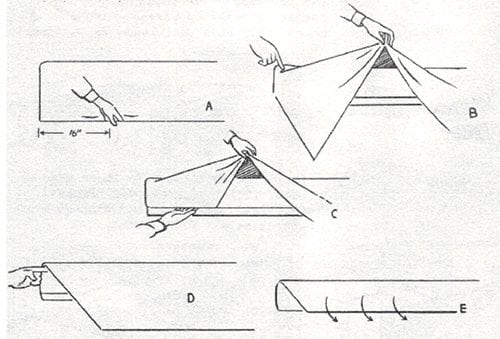
I swear bed making sounds easy. Our tutor is an ex-army nurse and takes hospital corners faaaar too seriously! I still have "make a triangle, fold it under and tuck" stuck in my head, which may be a good thing I suppose... I also didn't know that there were different names for the sheet 'layers'; he called them some weird name that I really can't remember cos it seems truly irrelevant really.


Personal care was a really interesting session although the tutor didn't spare any details (good thing I'm sure!). I have delivered (how detached does that sound?!) personal care in the past so have experience already although I have never done this in a hospital environment which I can imagine is slightly different given how busy it will be and the possibility of it being on a bay rather than a private room. I like that the way he described the entire process was focused on maintaining the dignity of the patient and ensuring that they retain as much independence as possible. One thing that was highlighted quite frequently was curtains are not sound proof which I'm told many healthcare professionals forget. Another thing that struck me is how operational it all seemed. All cleaning equipment is disposable to prevent cross infection. The whole help a patient to wash and change a sheet beneath them...I'm not sure how comfortable I would be in this situation... :0/


The vital observation sessions have been challenging. We've been    learning how to take manual blood pressure, temperature, capillary refill, oxygen saturation, pulse and respiratory rate and are soon to have an OSCE based around these skills (as well as communication of course!). My friends and I have been practising so we're hoping we'll cruise through it and I've been using my close ones as patients too :) I'm still absolutely terrified for this exam mind :O


Urinalysis and poo analysis were yummy as you can imagine. Again it was quite a basic session (more of an introduction to it) as I seriously couldn't just go into practice now and confidently say , "Yes, that's a 3 on the Bristol Stool Chart and that person's urine means they have XX wrong with them because they have XX in their wee!". Clearly practice makes perfect with these things. It seems pretty icky to wish for more experience with these things but I am...all part of being a nurse :)


Injection technique was an OK session...not exactly as I hoped but we learnt the basics, which I suppose is all we can hope for at this early stage. We were each given an 'arctic roll' (a rubber one, not an ice cream one) and practiced both subcutaneous (injection in fatty tissue) and intramuscular techniques (muscular tissue - deeper and more painful). I visited my first placement and my mentor told me that I will be administering subcut injections - terrifying prospect but really exciting too!


So that's a really brief overview of what we've been doing. I start placement in less than 2 weeks so will be able to (hopefully!) practice most of these things in real life.


I'll keep you posted :)

Wednesday, 17 April 2013

Finally getting our hands dirty...or clean. Nursing Practicals!

Hey!

So this week we've finally been able to get started on the exciting things - practicals. Yeah!

Hand Hygiene

We began by learning about the importance of infection control and how to wash our hands, which I must say is not as easy as it sounds. They asked that we put some sort of lotion on our hands (which would show up as dirt) and then wash our hands as we normally would. Personally I'm a bit of a stickler for having clean hands so I wash thoroughly. Following washing we had to put our hands under an ultraviolet light which showed me that I had missed several places on my hands - the heel of my hand and under the corner of one of my nails. Yak! So, lesson number one is to chop off my long-ish nails. As awful as that is to me, they have to go!
These are the places where most of us missed, and in fact most people miss when washing. Not good when you consider how easily those germs can be passed on.
Anyhoo, we were shown how to correctly wash our hands so as not to miss any areas. Here's the sort of flow that we were shown to follow:


These posters are above most sinks in hospitals so really there is no excuse to "forget".

The nurse taking the session gave us a warning though that the constant hand washing can have quite a large effect on the integrity of our skin and given that I have quite sensitive skin, this is something that I will have to keep on top of. All of the hand moisturisers that I received for Christmas will come in very handy I'm sure (absolutely no pun intended there, ha!) :)

She also shared this with us:
It's pretty self explanatory but it's basically the main times when you should be performing hand hygiene whilst in practice.

De-escalation

We also covered different methods of de-escalation, so how to try to avoid aggressive behaviour and how to calm situations down. This was a bit of an odd session. It was very much common sense - calm tone, eye contact, open body language, etc. We covered some different scenarios and carried out some role play which seemed simple enough, however I don't feel that the session has equipped me to an extent that I would feel ready to face a similar situation. In fact I don't think I'll be ready until I'm in that situation  It's very much a case of everyone and every situation is different as well. Human emotions are always going to be a big challenge and I don't think I'll ever predict what may happen. I just hope I develop enough skills to be able to cope without curling up into the foetal position and calling for my Mam! :0/

First Aid

The next session we had was around First Aid, mainly focusing on shock, dressings and choking in babies, children and adults. I've been to several of these sessions before but it was refreshing that we actually got to practice the techniques on actual people (dressings by the way, not knocking someone on the back!).

First and foremost we talked about the priorities of first aid:

  • Assess the situation quickly and calmly
  • Protect yourself and any casualties from danger
  • Prevent cross infection
  • Comfort and reassure casualties
  • Assess the casualty
  • Give early treatment and treat the casualties with the most serious (life-threatening) conditions first
  • Arrange for appropriate help

I think the second point hit home the most for me. Although I'd be very tempted to trump on in there and try to help out, it's so important to ensure that it's safe for you first, otherwise what help are you going to be if you're in the same position as them?

Following this, we learnt about how to recognise a choking casualty and how to treat them, learnt how to distinguish between different types of bleeding and how to treat it, and finally identified the possible signs and symptoms of shock and how to care for someone in that position.

Choking:

We were shown the correct technique, which is very similar to the picture below. I must say though that we were told to carry out up to 5 blows. What is the point in continuing beyond 2 blows if the item is dislodged and the patient is fine after that? Sounds silly but it's true. We were warned about the final, drastic step also. If abdominal thrusts are used then we must refer the patient to A&E as it can cause internal bleeding/damage. We were also shown the techniques for children and babies which I must say was not a pleasant experience but one I'm glad I now know about just in case.


Bleeding and Dressings:

This part of the session seems a lot easier than it was in practice I can assure you. There is definitely an art to applying a bandage and a triangular sling, one which I need to practice...a lot! Mine was rather squint and my sling was not ultimately supportive so I think I'll be purchasing a couple of first aid kits and fluttering my eyelashes a bit to my partner. Speaking of him, after 3 weeks of learning how to be a student nurse he has now decided that I know everything and can subsequently tell him why his leg hurts, how long things will take to heal and the best action to take...after 3 weeks! Clearly not. Anyway, I digress...
Here's what we did:


Seriously looks easier than it is!

 Shock:

Finally we looked at the signs and symptoms of shock and how to treat someone with them. The most common include:

  • A fast, weak pulse
  • Low blood pressure
  • Feeling faint, weak or nauseous
  • Dizziness
  • Cold, clammy skin
  • Rapid, shallow breathing
  • Blue lips
We were advised that the faster the symptoms are recognised the better, which in some cases can be very difficult if there are a lot of things going on. Imagine being in a car accident and this arose...how would you react? How quickly do you think you would recognise this, if at all? Definitely something to ponder...


As a final thought, we were told that being a nurse will always be a part of our lives, both inside and outside of work. It is our responsibility now to help all of those in need where we can and at least call emergency services if required. It really does make you realise that nursing is definitely a vocation and not necessarily a "career" per se. And for all of the bad press that nurses have had recently, I'm still proud to say I'm a student nurse. I'm learning the right way and I came into nursing in order to care which is exactly what I intend to do for the next 40 or so years.

Thanks for reading!